According to Charles Kaye, the idea to consider Zurich came from Sir András Schiff, who knew Solti well - "and it immediately made sense to both me and Solti's daughters". The conductor had close ties not only to the Tonhalle-Orchester Zürich, but to the city itself. he had come here as a refugee in 1939, "and he never forgot how many people helped him. He was incredibly grateful until the very end". There was the singer Max Hirzel, for example, with whom Solti lived in the early days; or the music lover Oscar Düby, who, as head of the Bernese immigration police, ensured that he could stay in Switzerland.
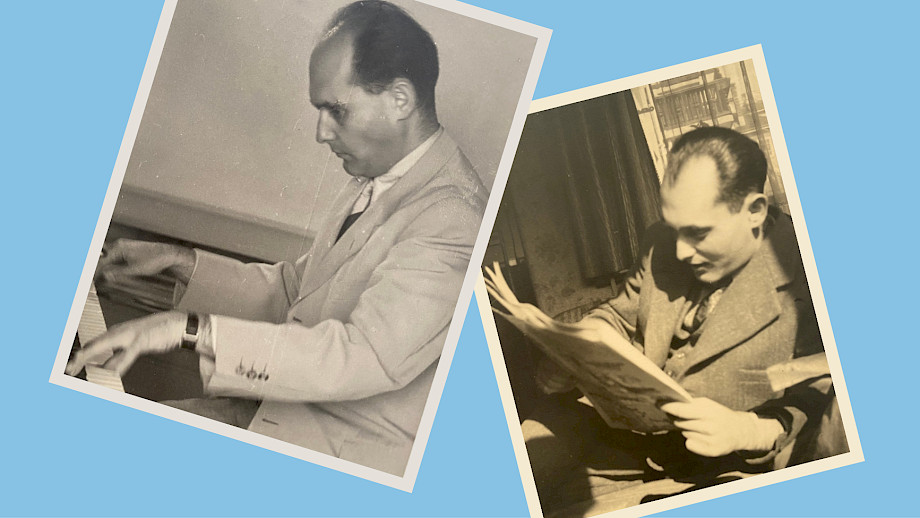
Georg Solti was still at the very beginning of his career at the time, "he had no money and no name yet". He had made his debut as a conductor in Budapest just a year before fleeing, but otherwise he was mainly looked upon as a talented pianist. As such, he won the Concours de Genève in 1942, with two consequences: On the one hand, he was granted a limited work permit, allowing him to teach, for example. And on the other hand, his calendar began to fill up with performances. He played Liszt with the Orchestre de la Suisse Romande, Mozart with the Zürcher Kammerorchester in the Tonhalle Zürich and a piano recital in Lugano.
Zurich test recording
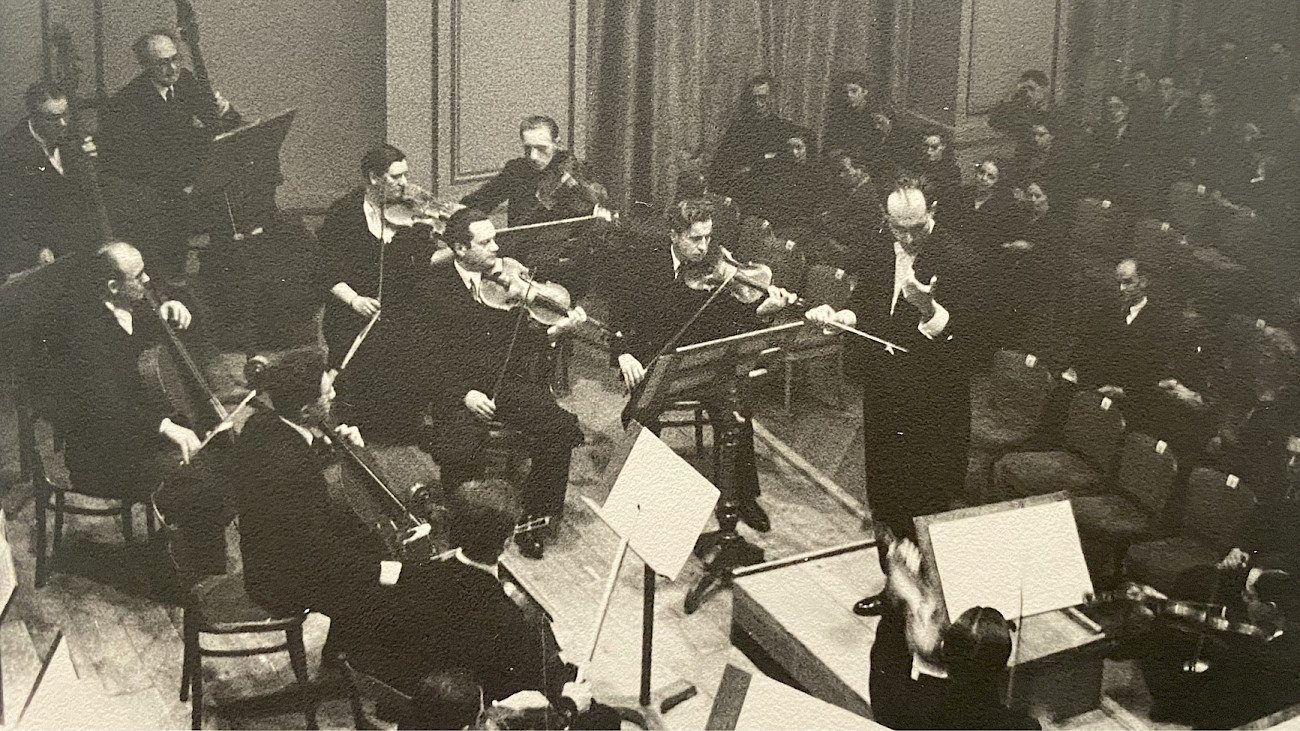
But above all he passionately wanted to conduct, "it was clear to him that this was his future", says Charles Kaye. Solti also repeatedly pressed Maurice Rosengarten, who was then head of the Decca label in Zurich, with this request. And Rosengarten eventually gave in: It was to be a test recording, with Beethoven's "Egmont" overture and the Tonhalle-Orchester Zürich. It was recorded in the Zurich radio studio - and laid the foundations for Solti's recording career as a conductor.
In 1946, Solti left Zurich to take up his appointment as music director at the Bavarian State Opera. The rest is history: as Music Director at the Frankfurt Opera, the Royal Opera House, Covent Garden in London and the Chicago Symphony Orchestra, as a regular guest with many important orchestras and as an extremely prolific Decca contract partner, he was one of the most successful musicians of his generation. His work was honoured with 31 Grammys, among other awards: a record that was only broken by Beyoncé in 2023.
Solti's ties to Zurich remained stable throughout his career. in 1949, for example, he conducted Mozart's "The Magic Flute" at the Opernhaus Zürich with Lisa della Casa as Pamina. And he returned to the Tonhalle time and again - mostly as a conductor, but once more as a pianist. After thirty years of exclusively conducting orchestras, Solti missed the piano, says Charles Kaye, "and when he started practising again, there was no stopping him". In June 1987, he played works by Mozart and Brahms as well as Bartók's Sonata for two pianos and percussion together with Murray Perahia.
"Could I buy it?"
One year earlier in Bologna - also at a concert with Murray Perahia - Solti had discovered the grand piano with ivory keys that now stands in the Tonhalle. The instruments for the concert had been supplied by Angelo Fabbrini, who, as the official Steinway representative in Pescara, set them up in such a personal way that his name was affixed to the case in sweeping gold lettering. Numerous pianists already played Fabbrini grand pianos exclusively at that time, including Arturo Benedetti Michelangeli and Maurizio Pollini. And now, according to Charles Kaye, Solti also tested two of these grand pianos that awaited him in Bologna.
With the second one, it was love at first note. "He said: 'I have never played such a wonderful instrument in my life, could I possibly buy it? Fabbrini, who was also in the hall, was flattered, but needed time to think about it: the grand piano had already been reserved for other concerts over the months coming.
Eight weeks later, Charles Kaye received the call: yes, the grand piano could now be made available. It was delivered to London just in time for Solti's 74th birthday, and secretly at that, as a surprise: "His wife, Lady Valerie Solti, took him into town, to lunch with two close friends – and meanwhile we managed to get the piano into his studio. When he came back, he could hardly believe that it was now his."
The last concert
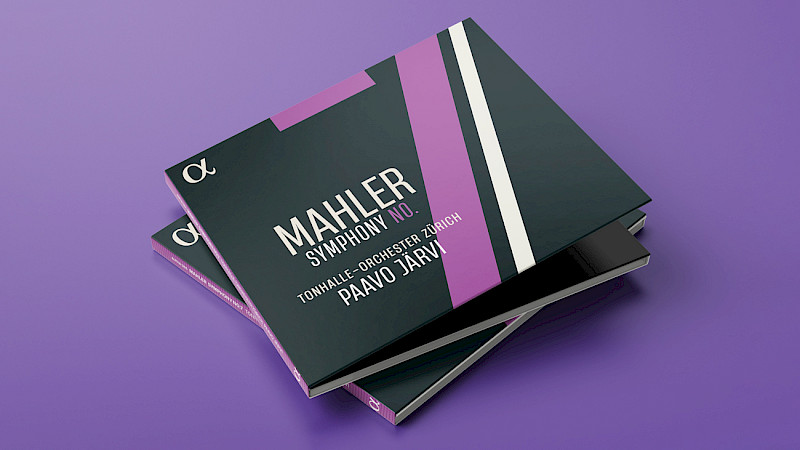
Almost ten years later, in July 1997, Sir Georg Solti conducted his last concert at the Tonhalle Zürich - just a few weeks before his unexpected death. Mahler's Symphony No. 5 was on the programme and, as the Tages-Anzeiger newspaper reported, the audience applauded until Solti asked them to stop: it was hot, he said, and they should please go home now. Another ten years later, the recording was released on CD, and it still shows what made him so special: how explosively and vitally he conducted until the very end, and what presence the orchestra radiated under his baton.
This also struck Executive and Artistic Director Ilona Schmiel about two years ago when she came across this Mahler recording while tidying up her CDs: "I was completely fascinated when I heard it again - and shortly afterwards I received an email from Charles Kaye, who wanted to talk about Solti's grand piano." So somehow, everything fell into place right from the start. For example, the Solti Foundation, which focuses on supporting up-and-coming talent, considers it very important that young musicians are able to play the piano: "Our Série jeunes is the perfect format for this."
However, there were still many details to be clarified and obstacles to be overcome before the aforementioned Tuesday afternoon. First of all, the grand piano had to be sent from London to Pescara, where for several months it underwent a careful overhaul and the restoration of its original tone quality. But now it is waiting in Zurich for its inauguration, for which it will be moved to the Grosse Tonhalle. Sir András Schiff - who has long been a devoted player of Fabbrini instruments - will play piano concerti by Bach and Beethoven on it (and make his debut as conductor of the Tonhalle-Orchester Zürich). He will also perform Bach's "Art of Fugue" on it.
Perhaps 91-year-old Angelo Fabbrini, Solti's daughter Gabrielle or his grandson George will be there for the dedication. And Charles Kaye will definitely be there: "A circle is closing," he says, "and I'm certain Georg Solti would be happy about that."